The Stack Scanning Revolution Nobody Saw Coming I watched a production service handle 50,000 requests per second with sub-millisecond GC pauses last week. Five years ago, that same workload would have required careful Java tuning or a rewrite in C++. The difference wasn’t better hardware or smarter algorithms. Go’s tricolor concurrent garbage collector had quietly evolved into something that changes how we think about memory-managed languages in systems programming. The real magic isn’t just the collector itself. It’s how Go’s runtime combines stack scanning with precise garbage collection in ways that make traditional tradeoffs obsolete. When the collector needs to…
-
-
The 3 AM Wake-Up Call That Changed Everything Three years ago, I watched a rolling update turn a minor configuration change into a cascading failure that took down our entire payment processing pipeline. The pods rolled out one by one, each carrying a subtle networking misconfiguration that only manifested under load. By the time we caught it, half our cluster was serving 500s and the other half was desperately trying to compensate. That incident taught me something important: rolling updates, Kubernetes’ default deployment strategy, are fundamentally broken for anything more complex than stateless web applications. Yes, they work beautifully in…
-

Why Most Performance Advice Misses the Mark After watching countless developers chase the wrong metrics for over a decade, I’ve learned that database performance isn’t about memorizing optimization tricks. It’s about understanding the fundamental trade-offs that govern how data systems behave under real-world conditions. The industry loves to focus on synthetic benchmarks and theoretical improvements, but production systems have their own rules. The Database Performance Lessons That Actually Matter After 15 Years Most performance problems I’ve encountered come from three areas: poor schema design decisions made early in a project’s lifecycle, query patterns that work fine in development but collapse…
-
When Event Sourcing Saved My Sleep Schedule Three years ago, I was debugging a cascade failure that had taken down our order processing system for the fourth time in two months. The problem wasn’t the code. It was the architecture. We had built a traditional CRUD system with tight coupling between services, and every time one component hiccupped, the entire chain collapsed like dominoes. The solution came from implementing event sourcing, but not the way most tutorials teach it. Instead of storing current state, we started capturing every state change as an immutable event. When the payment service went down,…
-
When Your Production Database Decides to Take a Coffee Break Picture this: 2:17 AM, your phone buzzes with that dreaded PagerDuty alert. Your e-commerce platform just ground to a halt during peak traffic from the Asia-Pacific region. The culprit? A seemingly innocent query that had been running fine for months suddenly decided to perform a full table scan on 50 million records. I’ve been there, and it’s the kind of wake-up call that teaches you more about database optimization in five minutes than most tutorials cover in five chapters. That night taught me something important about database performance: the devil…
-

The Pattern Nobody Talks About After fifteen years of building distributed systems that either scaled beautifully or collapsed spectacularly, I’ve noticed something odd. Everyone obsesses over microservices, event sourcing, and CQRS. Meanwhile, one of the most battle-tested patterns sits quietly in the corner, preventing catastrophic failures with zero fanfare. The Bulkhead pattern doesn’t get conference talks or trending GitHub repositories, but it’s saved more production systems than any architectural buzzword you can name. The Bulkhead Pattern: Why Your Distributed System Needs Compartments The name comes from shipbuilding. Naval architects learned centuries ago that a single hull breach shouldn’t sink the…
-
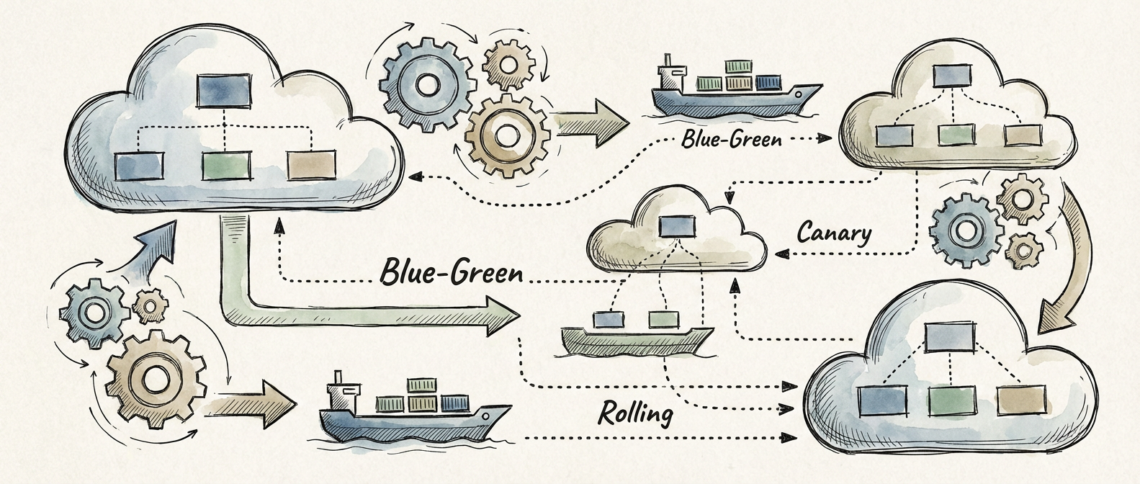
The Industry’s Rolling Update Obsession Walk into any Kubernetes discussion and you’ll hear the same mantra: rolling updates are the gold standard for production deployments. Zero downtime, gradual rollout, easy rollbacks. The marketing practically writes itself. I spent three years believing this story until I watched a financial services client’s payment processing system grind to a halt during what should have been a routine deployment. The Deployment Strategy Nobody Talks About: Why Recreate Beats Rolling Updates for Stateful Workloads The problem wasn’t the rolling update mechanism itself. It was that we were treating a stateful, session-heavy application like a stateless…
-
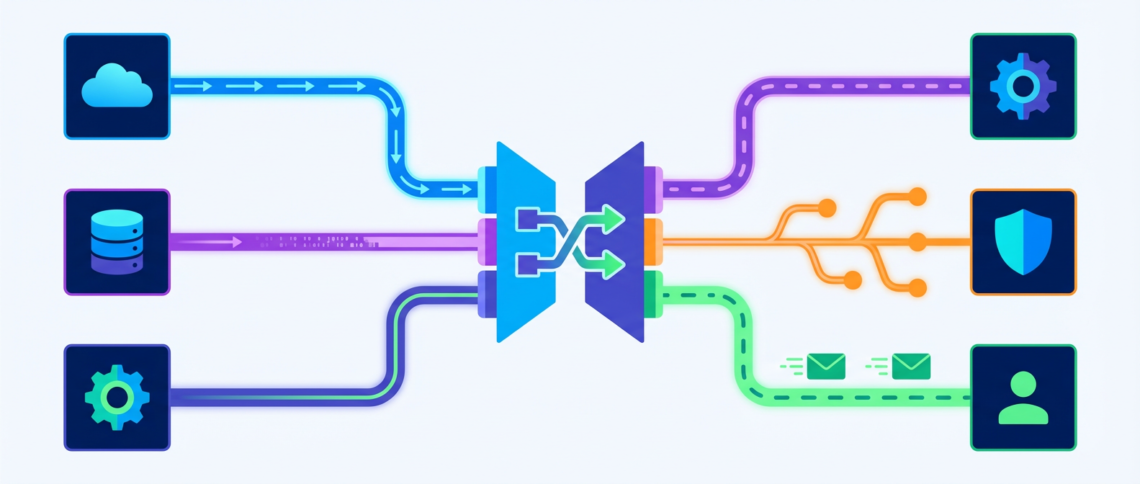
The Protocol Stack Is Shifting Beneath Us After fifteen years of watching distributed systems evolve from SOA monoliths to today’s microservices meshes, I can tell you that communication protocols are about to undergo their biggest transformation yet. We’re not just talking about REST versus gRPC anymore. The entire foundation of how services talk to each other is being rewritten, and the early signals are already visible if you know where to look. The Communication Layer Wars: What’s Actually Coming for Microservices The signs are showing up in three specific areas. First, WebAssembly is quietly sneaking into the service-to-service communication stack…
-

The Protocol Decision Matrix That Actually Matters After spending the better part of a decade debugging distributed systems at 3 AM, I’ve learned that choosing communication protocols isn’t about following the latest trend. It’s about understanding the operational reality of your specific context. The protocol you choose today will determine whether your on-call rotation becomes a nightmare or remains manageable. Choosing the Right Communication Protocol: A Microservices Battle-Tested Guide Most teams get seduced by theoretical performance benchmarks or architectural purity. But here’s what really matters: can your junior developers debug it when things go sideways? Can you trace a request…
-
At 2:47 AM on a Tuesday, the alerts started screaming. Our payment service had gone dark, taking down checkout flows across three time zones. The culprit? A single database connection pool that we’d treated like a reliable friend rather than the potential single point of failure it actually was. That night taught me more about distributed systems than any textbook ever could. Building distributed systems isn’t about avoiding failure. It’s about designing systems that fail gracefully and recover predictably. After a decade of building systems that process billions of transactions, I’ve learned that the patterns you choose early determine whether…
-

The Async-First Mentorship Signal Traditional over-the-shoulder mentorship is breaking down. Not because it’s fundamentally flawed, but because the context that made it work has shifted. When I started mentoring fifteen years ago, we sat in the same building, worked the same hours, and debugged problems on shared screens. Today’s reality is different. Remote-first teams, asynchronous collaboration, and distributed decision-making have changed the game. The Mentorship Stack: How Senior Engineers Will Guide Teams in 2030 The pattern here is clear: successful mentorship increasingly happens through documented decisions, recorded problem-solving sessions, and structured knowledge transfer. Companies like GitLab and Automattic have proven…
-
The Pattern Recognition Problem After fifteen years of building distributed systems and watching countless mentorship attempts fizzle out, I’ve noticed something. Most senior engineers approach mentorship the same way they approach debugging: they jump straight to the symptoms without understanding the underlying system. They see a junior developer struggling with code reviews and immediately start explaining clean code principles. They witness someone making poor architectural decisions and launch into lectures about design patterns. This symptom-first approach fails because it misses the fundamental issue. Junior engineers aren’t struggling with specific technical concepts. They’re struggling with pattern recognition. When I write code,…