• Blogging

    The Deployment Strategy Nobody Talks About: Why Recreate Beats Rolling Updates for Stateful Workloads

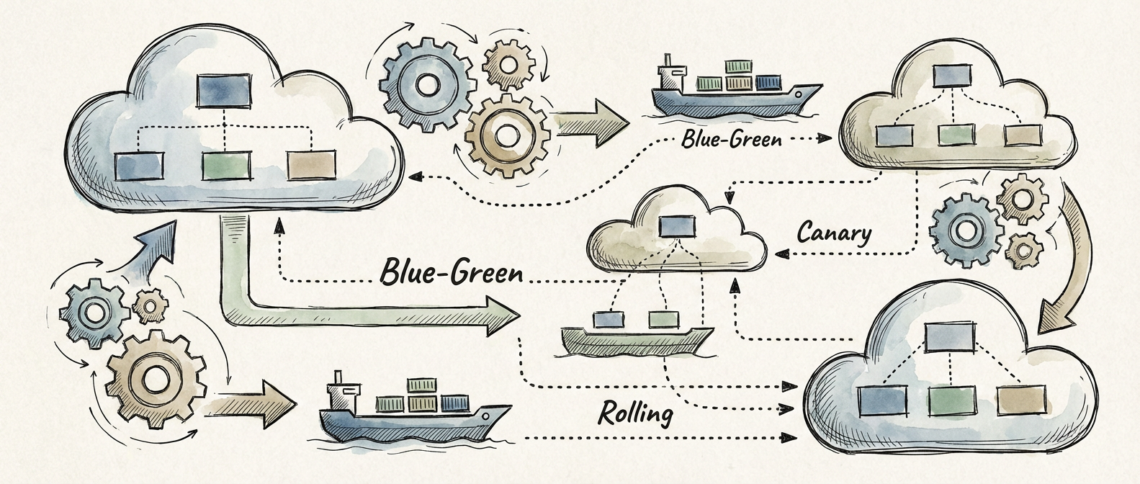
    The Industry’s Rolling Update Obsession Walk into any Kubernetes discussion and you’ll hear the same mantra: rolling updates are the gold standard for production deployments. Zero downtime, gradual rollout, easy rollbacks. The marketing practically writes itself. I spent three years believing this story until I watched a financial services client’s payment processing system grind to a halt during what should have been a routine deployment. The Deployment Strategy Nobody Talks About: Why Recreate Beats Rolling Updates for Stateful Workloads The problem wasn’t the rolling update mechanism itself. It was that we were treating a stateful, session-heavy application like a stateless…
  • Blogging

    The Communication Layer Wars: What’s Actually Coming for Microservices

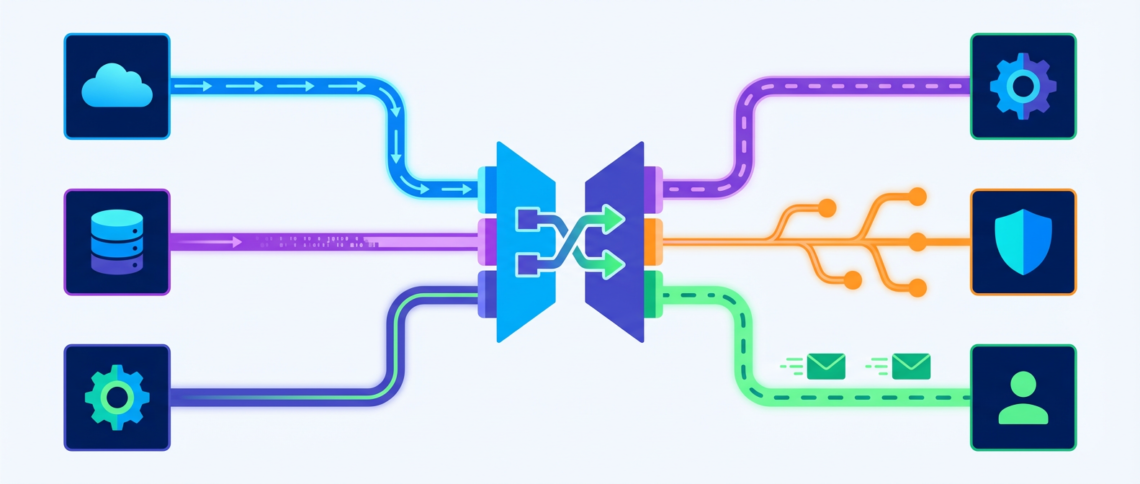
    The Protocol Stack Is Shifting Beneath Us After fifteen years of watching distributed systems evolve from SOA monoliths to today’s microservices meshes, I can tell you that communication protocols are about to undergo their biggest transformation yet. We’re not just talking about REST versus gRPC anymore. The entire foundation of how services talk to each other is being rewritten, and the early signals are already visible if you know where to look. The Communication Layer Wars: What’s Actually Coming for Microservices The signs are showing up in three specific areas. First, WebAssembly is quietly sneaking into the service-to-service communication stack…

  • Blogging

    Choosing the Right Communication Protocol: A Microservices Battle-Tested Guide

    The Protocol Decision Matrix That Actually Matters After spending the better part of a decade debugging distributed systems at 3 AM, I’ve learned that choosing communication protocols isn’t about following the latest trend. It’s about understanding the operational reality of your specific context. The protocol you choose today will determine whether your on-call rotation becomes a nightmare or remains manageable. Choosing the Right Communication Protocol: A Microservices Battle-Tested Guide Most teams get seduced by theoretical performance benchmarks or architectural purity. But here’s what really matters: can your junior developers debug it when things go sideways? Can you trace a request…

  • Blogging

    Why Your Distributed System Will Fail (And How to Design for It)

    At 2:47 AM on a Tuesday, the alerts started screaming. Our payment service had gone dark, taking down checkout flows across three time zones. The culprit? A single database connection pool that we’d treated like a reliable friend rather than the potential single point of failure it actually was. That night taught me more about distributed systems than any textbook ever could. Building distributed systems isn’t about avoiding failure. It’s about designing systems that fail gracefully and recover predictably. After a decade of building systems that process billions of transactions, I’ve learned that the patterns you choose early determine whether…

  • Blogging

    The Mentorship Stack: How Senior Engineers Will Guide Teams in 2030

    The Async-First Mentorship Signal Traditional over-the-shoulder mentorship is breaking down. Not because it’s fundamentally flawed, but because the context that made it work has shifted. When I started mentoring fifteen years ago, we sat in the same building, worked the same hours, and debugged problems on shared screens. Today’s reality is different. Remote-first teams, asynchronous collaboration, and distributed decision-making have changed the game. The Mentorship Stack: How Senior Engineers Will Guide Teams in 2030 The pattern here is clear: successful mentorship increasingly happens through documented decisions, recorded problem-solving sessions, and structured knowledge transfer. Companies like GitLab and Automattic have proven…

  • Blogging

    The Uncomfortable Truth About Senior Engineer Mentorship: Why Most Approaches Fail

    The Pattern Recognition Problem After fifteen years of building distributed systems and watching countless mentorship attempts fizzle out, I’ve noticed something. Most senior engineers approach mentorship the same way they approach debugging: they jump straight to the symptoms without understanding the underlying system. They see a junior developer struggling with code reviews and immediately start explaining clean code principles. They witness someone making poor architectural decisions and launch into lectures about design patterns. This symptom-first approach fails because it misses the fundamental issue. Junior engineers aren’t struggling with specific technical concepts. They’re struggling with pattern recognition. When I write code,…

  • Blogging

    API Versioning Strategies That Actually Work in Production

    The Version Number Theater Most Teams Play Walk into any engineering meeting about API design and someone will bring up semantic versioning. They’ll draw boxes on whiteboards showing v1.0, v1.1, v2.0 with neat little arrows between them. It looks clean. It feels organized. It’s also mostly fiction when you’re dealing with real systems that have real users. I’ve shipped APIs that started with grand versioning schemes and ended up as Frankenstein monsters of backward compatibility patches. The problem isn’t that semantic versioning is wrong. The problem is that most teams treat versioning as a release management problem when it’s actually…

  • Blogging

    Production Kubernetes Deployments: Three Strategies That Will Define 2025

    The Rolling Update Reality Check Rolling updates remain the backbone of production Kubernetes deployments, but they’re changing fast. After watching countless teams struggle with the default RollingUpdate strategy, I’ve seen a clear pattern emerge. The basic approach of updating pods gradually works until it doesn’t. Traffic spikes during deployments, database connection pools getting exhausted, and that dreaded moment when your new code can’t talk to the old database schema. Here’s what’s happening: teams are moving beyond basic rolling updates toward smarter orchestration. I’m seeing production environments use readiness gates that actually verify application health, not just container startup. These aren’t…

  • Blogging

    API Versioning in 2024: What the Battle Scars Taught Us About What’s Coming Next

    The Versioning Wars Are Over, But the Lessons Remain I’ve watched three distinct eras of API versioning unfold over the past decade. The early 2010s were dominated by URL versioning—slapping a v1, v2, v3 into every endpoint path like a badge of honor. Then came the header versioning evangelists, convinced that Accept headers were the path to RESTful enlightenment. Now we’re deep in the semantic versioning era, where every breaking change triggers existential debates about backward compatibility. API Versioning in 2024: What the Battle Scars Taught Us About What’s Coming Next What I’ve learned from shipping APIs that handle millions…

  • Blogging

    Core Web Vitals in 2026: Performance Benchmarks That Will Define Digital Success

    The New Performance Reality Web performance has shifted from nice-to-have to business-critical. Google’s integration of Core Web Vitals into its ranking algorithm since 2021 changed how we think about speed, responsiveness, and visual stability. What started as gentle nudges toward better user experience have become hard requirements for competitive visibility. Core Web Vitals in 2026: Performance Benchmarks That Will Define Digital Success The stakes keep rising. A Largest Contentful Paint (LCP) under 2.5 seconds isn’t impressive anymore. It’s the entry fee for serious ranking consideration. Sites that can’t meet this baseline find themselves fighting for scraps in search results, regardless…

  • Blogging

    The Core Web Vitals Landscape in 2026: Performance Metrics That Actually Move the Needle

    Why Performance Finally Became Non-Negotiable The web performance conversation shifted dramatically when Google integrated Core Web Vitals into its ranking algorithm back in 2021. What started as developer-focused metrics suddenly became boardroom priorities. Fast-forward to 2026, and the stakes have never been higher. Now you need Largest Contentful Paint (LCP) scores under 2.5 seconds just to stay competitive. Sites missing this mark aren’t just delivering poor user experiences. They’re actively handicapping their search visibility in an increasingly crowded digital space. This shift goes beyond algorithmic updates. User tolerance for slow experiences has plummeted alongside attention spans. Mobile-first browsing habits and…

  • Blogging

    Core Web Vitals in 2026: Performance Standards That Will Define Digital Success

    The New Performance Baseline Has Arrived Google’s integration of Core Web Vitals into its ranking algorithm back in 2021 changed everything for web performance. What started as a gentle nudge has become a competitive necessity. By 2026, these metrics have matured into non-negotiable standards that separate winning digital experiences from the also-rans. The biggest shift is around Largest Contentful Paint expectations. A sub-2.5 second LCP has gone from aspirational target to baseline requirement for any site hoping to compete in search rankings. This isn’t speculation. The data from millions of websites consistently shows that pages hitting this threshold significantly outperform…