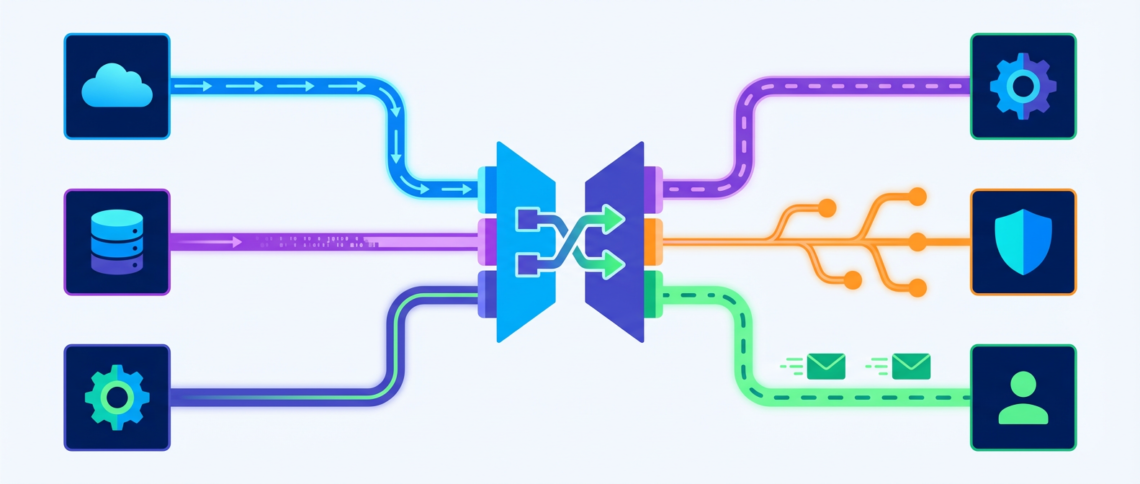
The Protocol Stack Is Shifting Beneath Us
After fifteen years of watching distributed systems evolve from SOA monoliths to today’s microservices meshes, I can tell you that communication protocols are about to undergo their biggest transformation yet. We’re not just talking about REST versus gRPC anymore. The entire foundation of how services talk to each other is being rewritten, and the early signals are already visible if you know where to look.
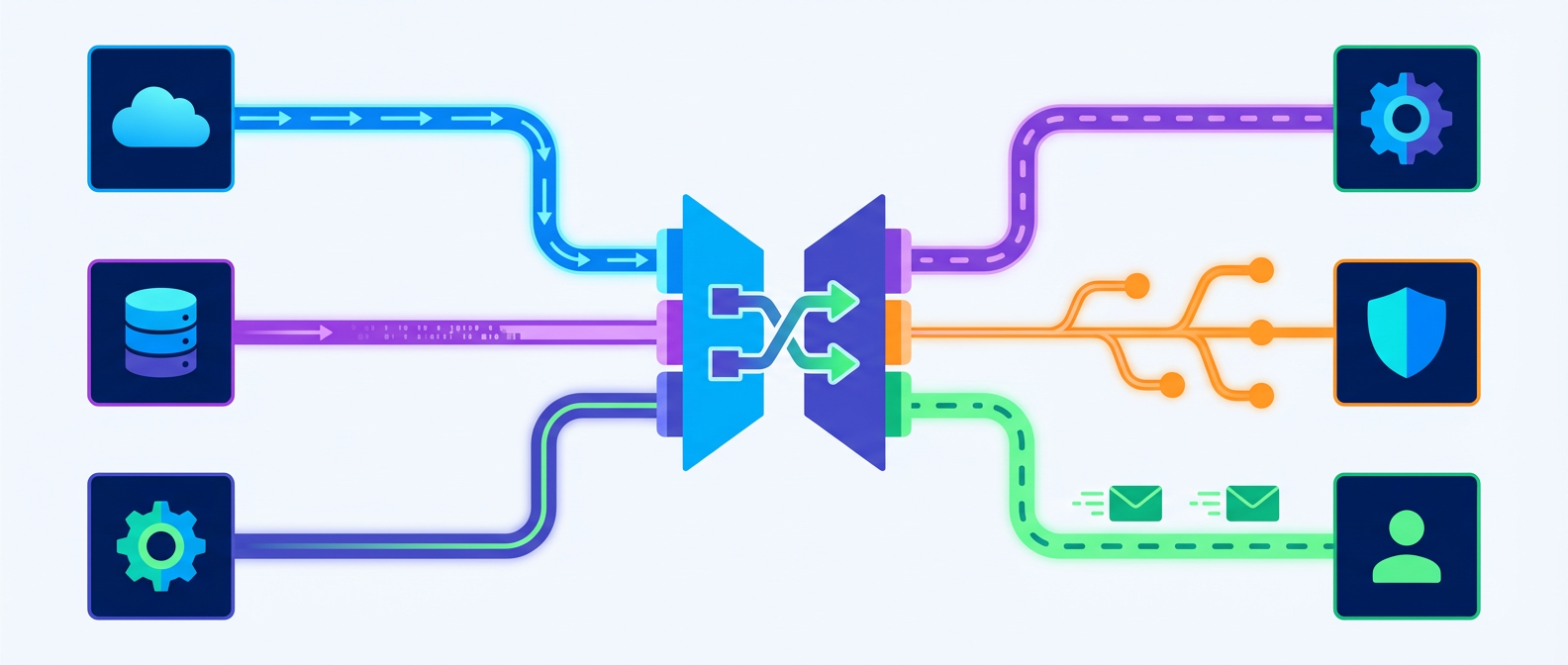
The signs are showing up in three specific areas. First, WebAssembly is quietly sneaking into the service-to-service communication stack in ways that will completely change how we think about protocol overhead. Second, truly standardized service mesh interfaces are putting pressure on protocol innovation that goes way beyond what Envoy can handle. Third, edge computing requirements are making us question everything we thought we knew about latency-tolerant communication patterns.
These aren’t just theoretical problems. I’ve spent the last eighteen months migrating a 200-service architecture through three different communication strategies, and the patterns I’m seeing tell me we’re hitting a major turning point. The question isn’t whether change is coming. It’s whether you’ll be ready for it.

WebAssembly Protocols: The Dark Horse
Here’s something most engineers aren’t tracking yet: WebAssembly is becoming a real target for protocol compilation. Not for running business logic, but for implementing the communication protocols themselves. I’ve been testing early implementations that compile protocol handlers to WASM and run them at the edge of service meshes. The performance numbers are genuinely surprising.
The evidence is pretty clear. Companies like Tetrate and Solo.io are pouring money into WASM-based protocol extensions for Envoy. But here’s what gets me excited about where this is headed: imagine being able to deploy new communication protocols as easily as you deploy application code today. No more waiting for proxy updates. No more compatibility hell between service mesh versions and protocol support.
I’m seeing early experiments where teams write custom serialization protocols in Rust, compile them to WASM, and hot-deploy them across their entire mesh. Latency drops by 40% because the protocol is optimized for their specific data patterns. This stuff isn’t production-ready yet, but the direction is obvious. Within three years, protocol development will be completely separate from infrastructure development.
Reality check time: current WASM runtimes still have enough overhead to make this impractical for high-frequency trading or real-time systems. But for the 95% of microservices that aren’t pushing microsecond boundaries, the math already works.
Beyond HTTP: The Post-REST Reality
REST is dying, but not how you think. The protocol itself will stick around for decades, but its days as the default choice for internal service communication are numbered. I’ve watched three large-scale migrations in the past year where teams moved away from HTTP for internal calls while keeping it for external APIs. The reasons are always the same: latency, resource efficiency, and schema evolution.
gRPC was supposed to solve this, but it’s turning out to be a bridge technology. The real action is happening in two places. First, binary protocols designed specifically for service mesh environments. These protocols assume reliable network transport and skip most of HTTP’s redundant error handling. Second, event-streaming protocols that treat all service communication as temporal data flows rather than request-response pairs.
Apache Pulsar’s adoption curve tells the whole story. When teams start using Pulsar for service communication instead of just data pipeline work, they’re signaling a fundamental shift in how they think about architecture. Services become event processors rather than API endpoints. The communication layer becomes stateful rather than stateless. This changes everything about how we design fault tolerance and observability.
Here’s my prediction: by 2027, successful microservices architectures will use HTTP only at their external boundaries. Internal communication will split between optimized binary protocols for synchronous calls and event streaming for asynchronous workflows. The teams that make this transition early will have serious competitive advantages in system performance and operational complexity.
Edge-Native Communication Patterns
Edge computing isn’t just changing where we run code. It’s changing how services need to communicate. I’ve been working with edge deployments where services run across hundreds of locations, and traditional communication assumptions just fall apart. Network partitions aren’t edge cases anymore. They’re the normal state of things.
You can see this in how edge-native companies are building their communication layers. Cloudflare Workers, for example, implements communication patterns that assume network unreliability from the start. Their service-to-service calls include automatic retry with exponential backoff, request deduplication, and graceful degradation built into the protocol layer. This isn’t application logic anymore. It’s protocol logic.
What gets me excited is seeing communication protocols designed specifically for intermittent connectivity. These protocols buffer, compress, and batch service calls automatically. They understand network topology and route requests through the most reliable paths. When network conditions improve, they flood-fill missing data to achieve eventual consistency.
Here’s where I think this is going: within five years, these edge-optimized communication patterns will become the default even for traditional data center deployments. Why? Because the same techniques that handle network partitions between edge locations also handle the partial failures that plague every distributed system. Edge requirements are forcing us to build communication protocols that are just fundamentally more robust.
The Implementation Reality Check
Here’s where theory crashes into practice. I’ve implemented pieces of what I’m describing, and the current tooling just isn’t ready yet. Service mesh control planes assume HTTP-based protocols. Observability tools expect REST semantics. Security models are built around request-response patterns. Moving beyond these assumptions means rebuilding huge chunks of the surrounding ecosystem.
But the economics make the rebuilding worth it. Teams are accepting the integration complexity because the performance improvements are measured in orders of magnitude, not percentages. When your communication overhead drops from 30% to 3% of total system resources, you can afford to invest in custom tooling.
The companies that will nail this transition are the ones building abstraction layers right now. They’re creating communication frameworks that can swap protocols underneath without changing application code. They’re designing observability systems that understand temporal data flows instead of just HTTP transactions. They’re treating communication protocols as part of their core competitive advantage rather than just infrastructure stuff you buy.
If you’re dealing with microservices communication challenges today, I’d love to hear about your experiences. The patterns I’m seeing are consistent across industries, but every implementation has unique constraints. What communication bottlenecks are you hitting that current protocols can’t solve? Drop me a line and let’s figure this out together.