The Problem We’ve Been Ignoring
For years, we’ve built around a fundamental constraint. Global applications needed consistency, but consistency across regions meant accepting latency or accepting eventual inconsistency. We picked our poison. Some teams went with eventual consistency and lived with the bugs that followed. Others pushed all writes to a primary region and accepted that every user on the other side of the world was working at a disadvantage. Both solutions felt like compromises because they were.
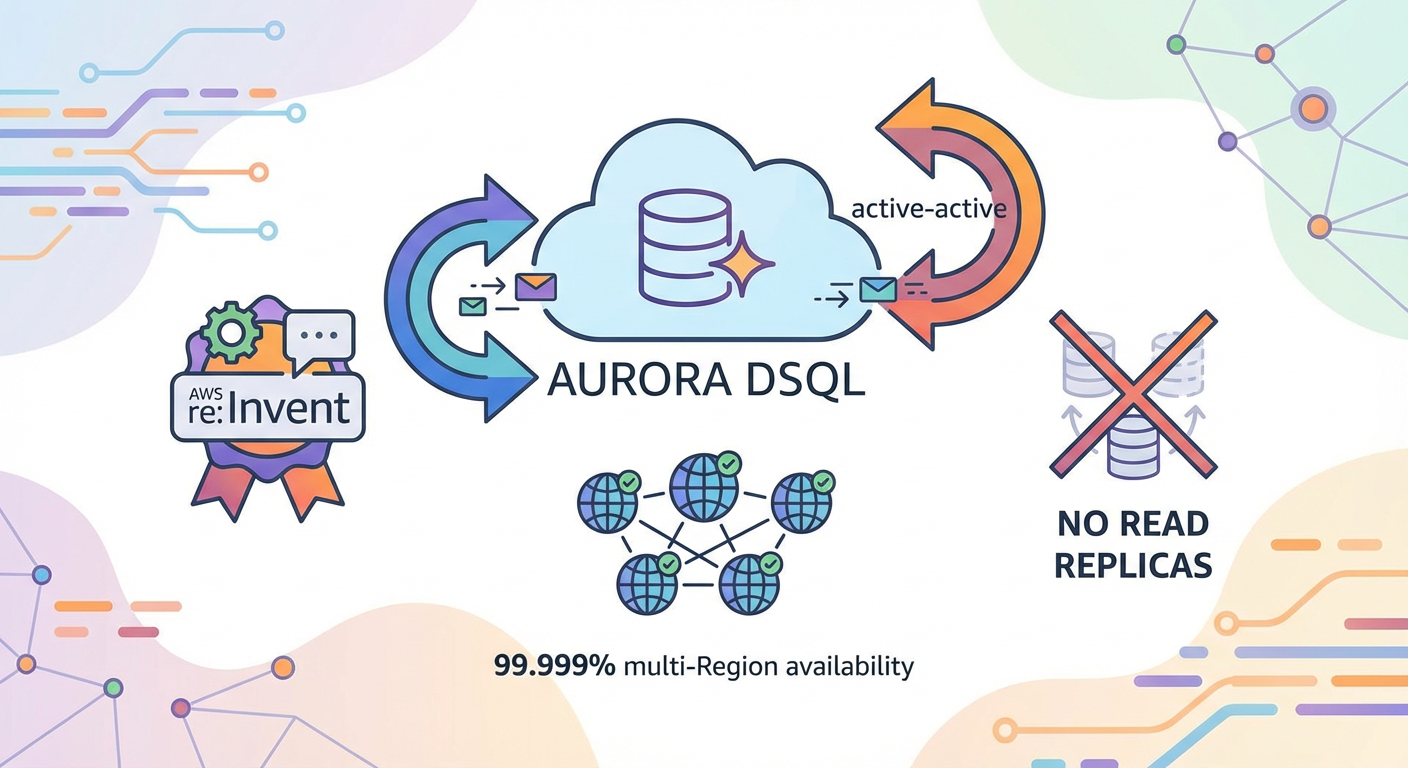
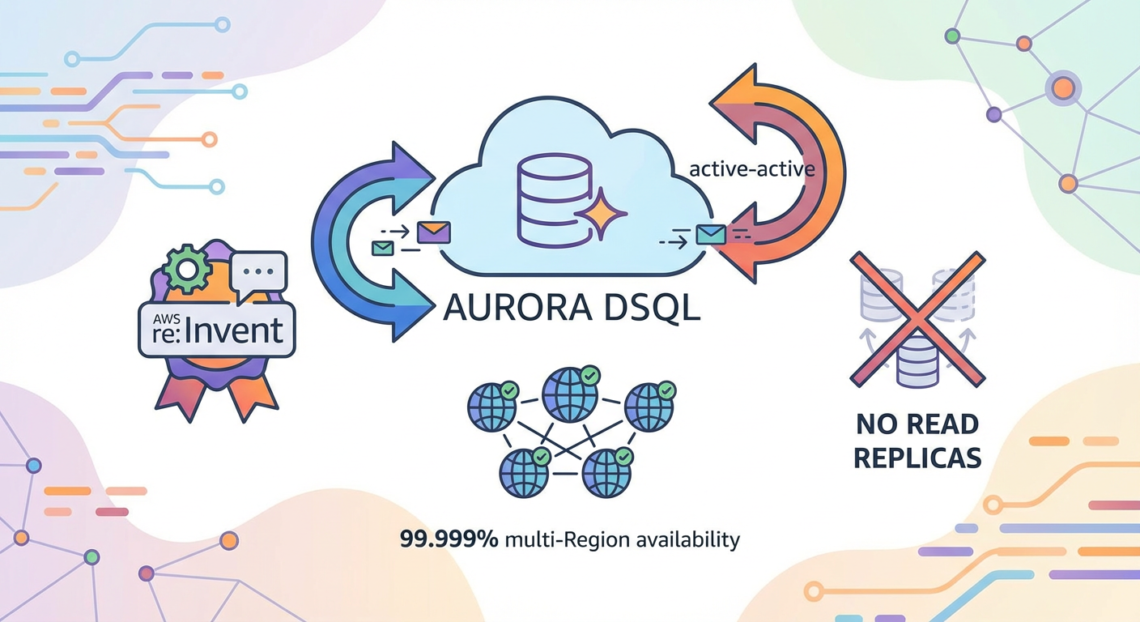
I spent enough years debugging replication lag issues and watching transactions fail mysteriously that I stopped expecting this problem to be solved cleanly. Then Amazon announced something at re:Invent 2024 that deserves closer attention than the launch hype suggested. It’s called Amazon Aurora DSQL, and it approaches the distributed SQL problem differently than anyone has before.
The Architecture That Changes the Game
Aurora DSQL isn’t a minor iteration. The fundamental design departs from how databases have worked for decades. Instead of using the traditional multi-version concurrency control model that most modern databases rely on, Aurora DSQL implements optimistic concurrency control with a critical architectural separation: the transaction log lives outside the storage layer entirely.
This matters more than it sounds. In traditional setups, your write operations are tightly coupled to the storage system that contains your transaction log. That coupling creates bottlenecks. When you’re writing across regions, coordinating these tightly bound systems becomes a coordination nightmare. Amazon’s approach decouples them. The transaction log becomes an external service, which means writes can happen in parallel across regions without the usual synchronization overhead. According to the technical details Amazon provided, this architecture reduces write latency by up to 40 percent in cross-region scenarios compared to conventional approaches.
I’ve spent enough time optimizing around replication lag to know what a 40 percent improvement actually means in practice. That’s not a marketing bump. That’s the difference between acceptable performance and something that actually feels responsive to global users.
99.999% Availability That You Can Actually Use
Aurora DSQL targets what AWS calls five-nines availability: 99.999 percent uptime across multiple regions with no read replicas required. This is important. Previous distributed databases required read replicas to handle failover. Read replicas meant additional cost, additional operational complexity, and additional failure modes. Aurora DSQL provides this availability as a native feature of the architecture.
Google Cloud Spanner has been claiming similar numbers for years. Their infrastructure processes over 2 billion requests per second across their customer base, and they maintain their five-nines SLA across multi-region deployments. That’s proven at scale. What’s different now is that AWS is offering this capability at a different price point and within their ecosystem, where most enterprises already live.
As of Q1 2026, Aurora DSQL reached general availability across four AWS regions, with pricing starting at $0.50 per DPU-hour. That positions it directly against both Spanner and CockroachDB Dedicated. The pricing matters because it means you’re not paying a massive premium for global consistency anymore. The economics have shifted enough that distributed SQL is becoming table stakes rather than a specialized tool for specific use cases.
The Market Finally Catches Up
Beyond the technical merits, the market signal is hard to ignore. Gartner identified distributed SQL as the fastest-growing segment in their 2025 Magic Quadrant for Cloud Database Management Systems. Year-over-year adoption among Fortune 500 companies increased 38 percent. That’s not a gradual trend. That’s momentum. Companies that spent years avoiding distributed databases because of complexity and cost are now actively evaluating them.
When I started working on this problem, distributed SQL was considered a specialized solution. You used it only if you absolutely had to. Now it’s approaching the mainstream. That shift happened because the technology finally matured enough to be reliable and the economics finally made sense. Aurora DSQL’s launch shows clearly where we are in that maturation curve.
What This Means for Your Architecture Decisions
The practical implication is straightforward: if you’re building new global applications or rearchitecting existing ones, you can now seriously consider distributed SQL without the usual caveats. The operational overhead has decreased. The cost has become competitive. The availability guarantees are real, not marketing speak.
Does this mean you should migrate everything to Aurora DSQL tomorrow? No. Regional databases with clever caching strategies still make sense for certain workloads. Event-driven architectures with eventual consistency still have their place. What’s changed is that consistency at scale across regions is now a viable option that doesn’t require either impossible coordination overhead or prohibitive cost.
I’ve learned that database architecture decisions shape everything downstream. Bad decisions here echo through years of operational pain. The fact that distributed SQL has reached this level of maturity, with multiple credible options from major cloud providers, means you can make that bet now with reasonable confidence. That’s worth paying attention to, even if it didn’t make the keynote highlight reel at re:Invent.
If you’re evaluating architecture changes for global deployments, I’d recommend spending time with the AWS re:Invent 2024 Aurora DSQL announcement details and actually testing Aurora DSQL in your environment. The technology is solid enough now that the results you get in testing will likely reflect what you’ll see in production. That hasn’t always been true with database innovations. This time, it is.